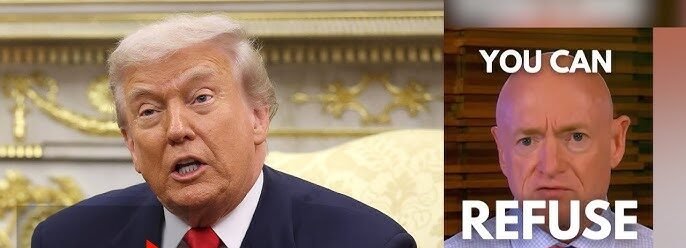
In November 2025, six Democratic lawmakers with military and intelligence backgrounds released a video telling U.S. service members they “can and must refuse unlawful orders.”
📌 The Facts
- The lawmakers included Senators Elissa Slotkin and Mark Kelly, along with Representatives Jason Crow, Chris Deluzio, Maggie Goodlander, and Chrissy Houlahan.
- Their message: Troops swear allegiance to the Constitution, not to any president, and therefore should refuse illegal commands.
- The timing: Controversy over U.S. military strikes against alleged drug‑carrying vessels in the Caribbean and Pacific, which raised questions about legality.
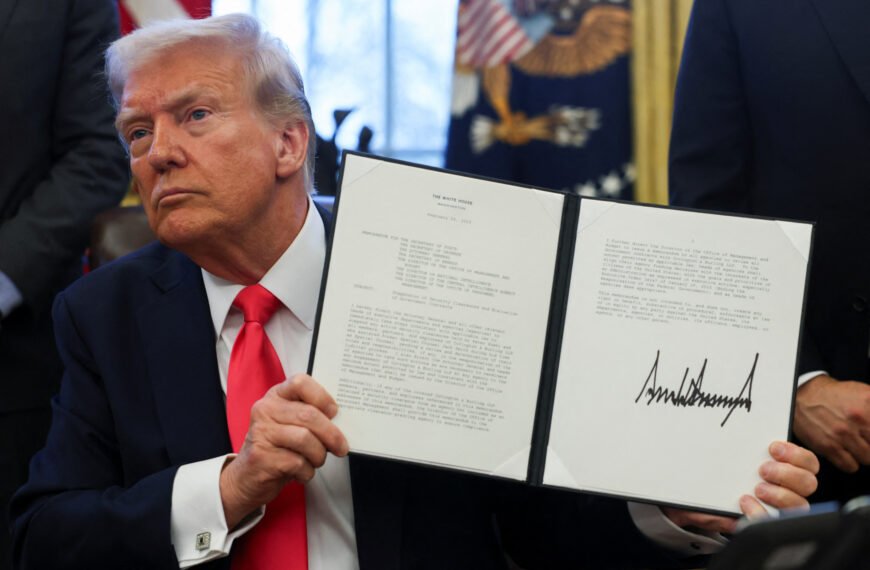
- The fallout: President Trump blasted the video as “seditious” and warned that encouraging refusal of orders could itself be punishable.
⚖️ The Law
- Under the Uniform Code of Military Justice (UCMJ), troops must obey lawful orders.
- They are trained from day one that they must refuse unlawful ones — this is not new information.
- Refusing a lawful order is itself a crime, punishable by court‑martial.
⚖️ What Happens to Soldiers Who Refuse Orders
- If the order is lawful: Refusal is punishable under the UCMJ.
- Article 90: Willfully disobeying a superior officer.
- Article 92: Failure to obey an order or regulation.
- Possible punishments: Reduction in rank, loss of pay, confinement, dishonorable discharge.
⚖️ What Could Happen to Lawmakers
- Encouraging refusal: If lawmakers are seen as telling troops to disobey lawful orders, critics argue it could be treated as incitement, sedition, or unlawful influence.
- Potential repercussions: Formal censure in Congress, ethics investigations, or legal scrutiny.
- Reality check: Criminal charges are rare for speech, but accusations alone can damage credibility and fuel backlash.
💥 My Take
I think this was a bad move by the Democrats. Troops already know their duty — they don’t need politicians reminding them in a way that stirs confusion. This video wasn’t about educating soldiers; it was about sewing public doubt in the chain of command. That’s dangerous.
When lawmakers blur the line between legal duty and political messaging, they risk undermining discipline and trust. Maybe they should be held accountable for the consequences of putting that message out there.
💥 Why This Matters
By leaving out these consequences, the video risks confusing the public. Soldiers already know the rules — they’re trained on them. The real controversy is whether lawmakers crossed a line by broadcasting a message that could be read as undermining discipline.
🔑 Updated Blog Punch
Troops who refuse lawful orders face court‑martial, jail, and dishonorable discharge. Lawmakers who encourage refusal could face censure or worse. This wasn’t education — it was agitation. And agitation has consequences.
🗣️ What Do You Think?
Were these lawmakers defending the Constitution, or were they playing politics with the military?
Leave a comment — I want to hear your take.
 By
By