What “Polarization” Really Means
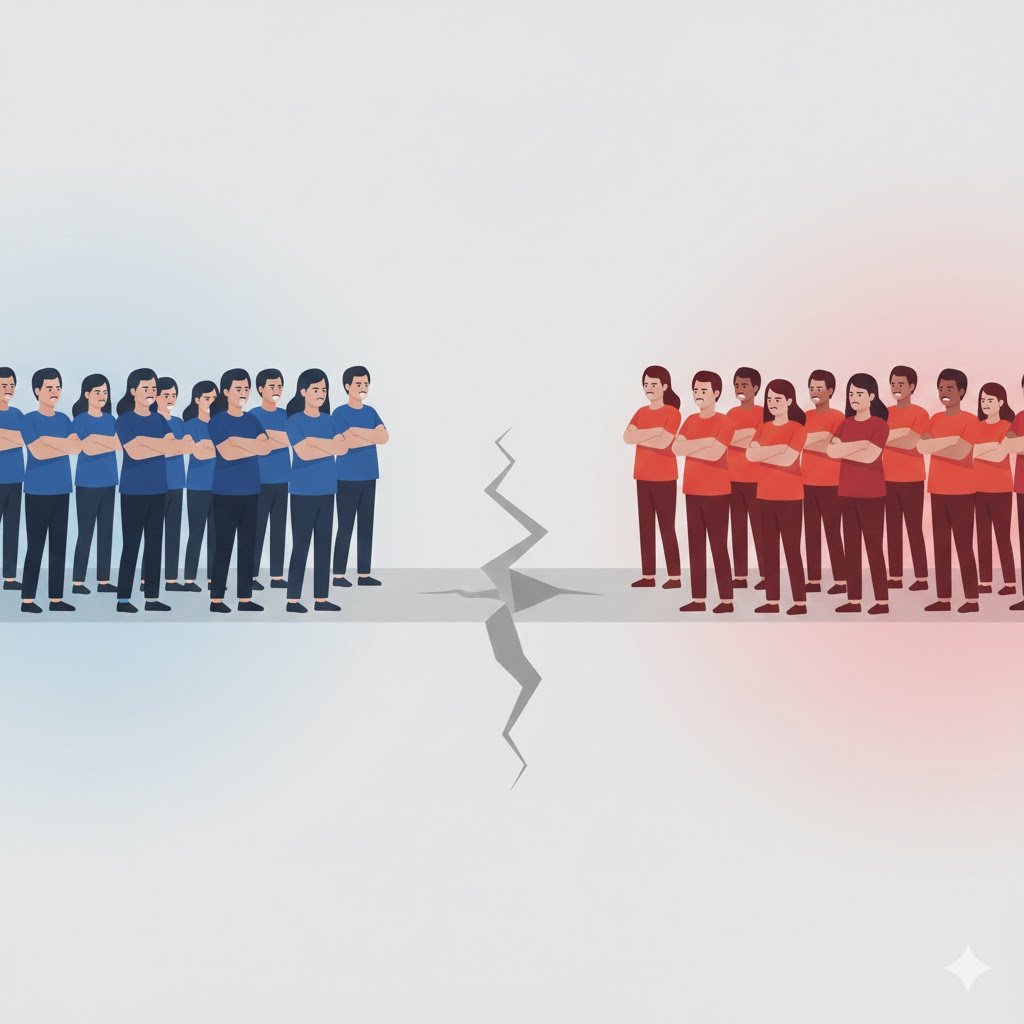
“Polarization” gets blamed for everything from Thanksgiving fights to government shutdowns. At its core, it describes a situation where people’s views and loyalties stop clustering in the middle and instead clump into two angry, opposing camps.
Official meaning
In politics, polarization means:
- Opinions, beliefs, and party positions move away from the center toward the extremes.
- The space for shared ground shrinks, and people increasingly line up as “us” versus “them” across a wide range of issues.
Political scientists break it down into ideological polarization (disagreement about policies) and affective polarization (emotional dislike and distrust of the other side).
What it really means
On the ground, polarization looks like this:
- Most people reliably support one party and strongly dislike the other, treating the other side less like neighbors who disagree and more like enemies who threaten their way of life.
- The parties themselves pull apart, with almost no overlap: one side is “always” for one cluster of positions, the other side is “always” for the opposite, and the middle turns into a no‑man’s‑land.
At high levels, you get lifestyle polarization too—where people cluster geographically, socially, and online with those who think like they do, making the divide feel permanent and personal.
Why they use this word
“Polarization” has become a catch‑all explanation:
- Commentators and politicians use it to explain gridlock, distrust, and social tension—“we’re so polarized”—without always naming the specific policies, media habits, and power games that are driving the split.
- The word is now so common that Merriam‑Webster named it the 2024 Word of the Year, reflecting how often people look it up just to understand what everyone keeps complaining about.
Sometimes “polarization” is used to imply “both sides are equally extreme,” even when the data show one side has moved more than the other on certain issues.
How to spot it in the wild
Next time someone blames “polarization,” ask:
- Are they talking about concrete behavior—like parties refusing to compromise, voters hating the other side, or media rewarding outrage—or just using the word as a vague diagnosis?
- Is the polarization mainly about policies (taxes, immigration, etc.), or about identity and emotions (seeing the other side as immoral, stupid, or dangerous)? The second is affective polarization and is usually the more toxic kind.
- Are they using “polarization” to dodge responsibility (“it’s the country’s fault”) instead of naming who benefits from keeping people divided and angry?

