
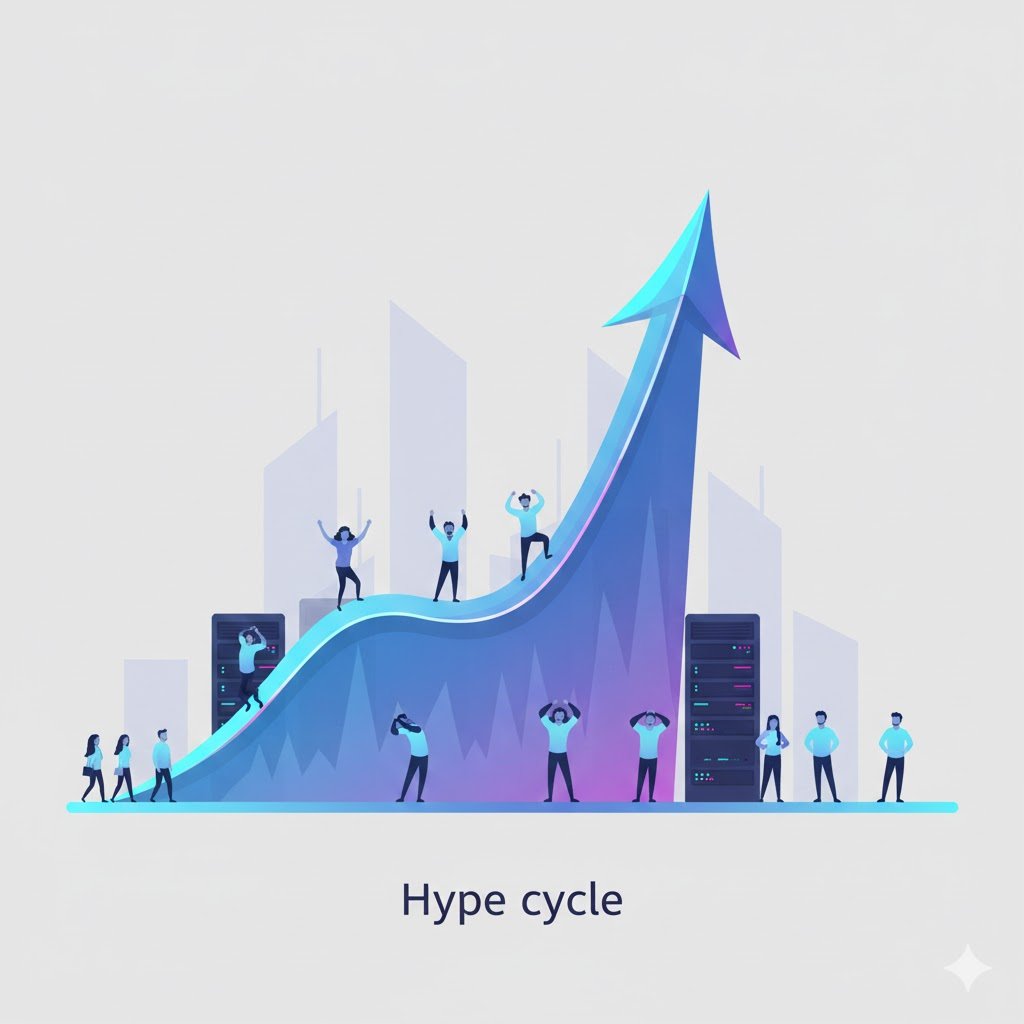
When people say a technology is “in the hype cycle,” they mean it is riding that familiar roller coaster from wild promises, to disappointment, to “oh, this is actually useful.” It is a way of admitting that excitement, media coverage, and investment often move faster than reality, especially with things like AI, crypto, or whatever the current “revolution” is supposed to be.
What it officially means
In research and business slides, the hype cycle is a simple curve with five stages that track expectations for a new technology over time. It usually starts with a trigger (a breakthrough or flashy demo), shoots up to a peak of inflated expectations, crashes into a trough of disillusionment, then slowly climbs the slope of enlightenment to a plateau of productivity where the tech becomes normal and boring but actually useful.
What it really means in practice
When people talk about the hype cycle online, they are usually calling BS on marketing claims or reminding everyone that we have seen this movie before. It is a shorthand way to say “this might matter someday, but right now a lot of people are overpromising, and a crash is coming before the real value shows up.”
Why they use it
Commentators, analysts, and investors like “hype cycle” because it sounds technical while quietly telling you not to be a sucker. Politicians and CEOs can use it to sound savvy about new trends (“we’re past the hype and into real deployment”) without admitting they once helped pump the bubble.
How to spot it
You are in a hype cycle when: every conference panel suddenly has the same buzzword, early winners are treated like proof the revolution is guaranteed, and critics get waved off as “not getting it.” A little later, stories flip to disappointment and “this was overhyped,” then eventually settle into normal coverage once the technology finds its real, smaller lane.

